
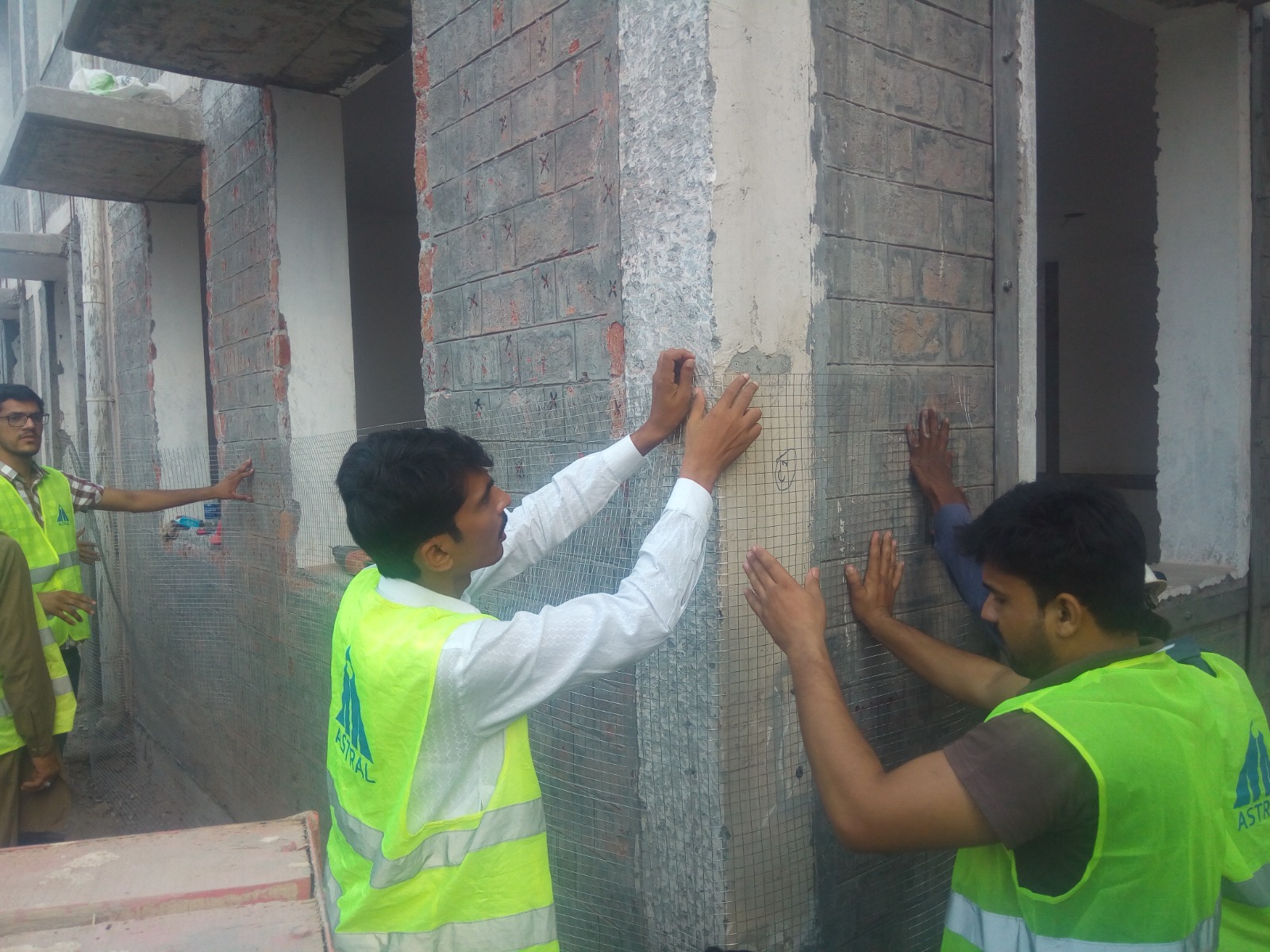
In 2020 MCC executed its first major third-party contract: structural assessment and retrofitting of 10 government schools across Khyber Pakhtunkhwa, commissioned by IMC Worldwide under the DFID-funded School Construction and Rehabilitation Programme. It was the project that earned us the C3/E upgrade, triggered the SECP incorporation that followed, and shaped how we think about every project since.
Here is the work, the lessons, and what changed in our standard operating procedure as a direct result.
The brief. IMC Worldwide, a UK-based engineering consultancy, was running structural assessments and rehabilitation across government schools in KP under the DFID School Construction and Rehabilitation Programme. The schools had been operating for decades — some had been retrofitted before, several had undocumented modifications, and many were missing structural members that earlier assessments had flagged but no contractor had executed against. MCC's scope: assess, document, and rectify.
The fundamental difference between retrofit and new build. New construction is forgiving — you control every variable from the foundation up. Retrofit is the opposite. Every intervention has to integrate with whatever is already there, including modifications nobody documented, materials whose specifications nobody has, and load paths that have shifted over decades of use. You can't just apply the design — you have to first reverse-engineer what's actually standing.
The first lesson: the discrepancy between drawings and reality is always larger than estimated. On every one of the 10 schools, the structural drawings IMC supplied were accurate at the time they were drawn. They were not accurate to the buildings as they stood. Walls had been added or removed. Beams had been resized at some point during a previous repair. Reinforcement that should have been there in the drawings was missing on site. The first deliverable on every school was a written discrepancy log — what the drawings said vs. what we found when we exposed the structure.
The second: schedule is harder than scope. Schools were active. Retrofit work had to happen during off-hours, weekends, and the summer break. Sequencing 10 schools across a single programme — with the same crew, the same materials, and overlapping site logistics — is a programme management problem before it is a structural problem. We built a master schedule with explicit "school occupancy windows" baked in, and worked backwards from each school's break calendar to the date our crew had to be on site. Materials were staged off-site and trucked in only when the school was actually closed.
The third: documentation is the deliverable. IMC's reporting requirements were, correctly, exacting. Every retrofit decision had to be backed by photographic evidence of the pre-existing condition, the structural reasoning for the intervention chosen, the material specification, and post-completion verification. We came out of the programme with a documentation discipline that we now apply by default to every MCC project — even when the client doesn't formally require it. The documentation isn't for the client. It's for whoever has to understand the structure 20 years from now.
The fourth: structural retrofit teaches you what new construction should never become. When you spend a year inside a decade-old structure trying to identify why a beam went missing, why a column was undersized, why a connection failed — you end up with a permanent appreciation for the discipline that has to go into the moment a structure is poured. Every retrofit is a forensic record of someone else's shortcuts. After 10 schools' worth of those records, our standard for new construction got measurably stricter. That track record, more than anything else, is what made the upgrade to PEC C3/E a formality when it came.
The outcome. All 10 schools rehabilitated, structural integrity restored, programme delivered on schedule in 2020. The schools serve thousands of students today. IMC's documentation closed cleanly. MCC came out the other side as a category C3 contractor with the institutional credibility to incorporate, hire, and pursue larger work.
The takeaway for clients considering structural retrofit. Three things to budget for that most retrofit RFPs underestimate:
1. Discovery time. Allow at least 15% of the programme for the gap between drawings and reality. It's never zero. 2. Sequencing complexity. If the building is occupied, your contractor's project management capability matters more than their construction speed. 3. Documentation discipline. Insist on photographic and written records of every intervention. Future engineers — including possibly your own future engineer — will need them.
We built MCC's culture around lessons one through three. They came out of these 10 schools.